

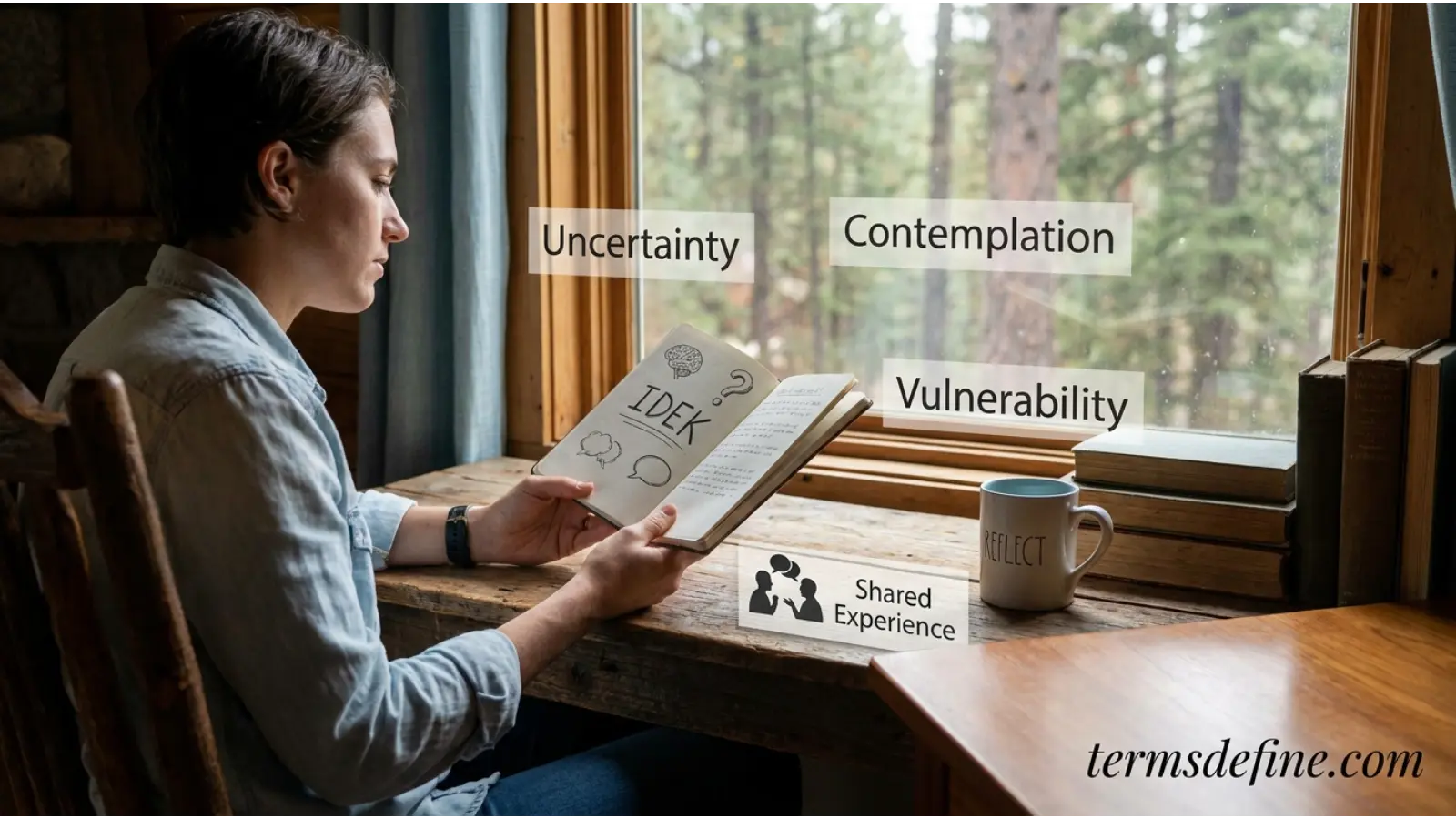
You’re scrolling through a group chat and someone replies with just “IDEK.” No context, no explanation. If you’ve never seen it before, it can feel like a secret code. The good news is that it’s one of the easier texting abbreviations to understand once you know the full form.
People use IDEK when they genuinely don’t know the answer to something, but they want to say it in a quick, casual way instead of typing a full sentence. It shows up in texts, DMs, comments, and casual chats where speed matters more than grammar.
Quick Answer:
IDEK Meaning in Text “I Don’t Even Know.” It’s used when someone is genuinely unsure, confused, or unwilling to give a straight answer. It has one main meaning and is almost always informal, so it’s best avoided in professional or formal writing.
What Does IDEK Meaning in Text?
IDEK is short for “I Don’t Even Know.” The word “even” is the key part here. It adds emphasis, making the phrase feel stronger than a plain “I don’t know.”
When someone types IDEK, they’re often expressing mild frustration, confusion, or surprise at their own uncertainty. It’s a slightly more expressive cousin of IDK, which simply means “I don’t know” without that added emotional punch.
The Deeper Meaning Behind IDEK
On the surface, IDEK just means uncertainty. But in real conversations, it carries more emotional weight than a simple “I don’t know.”
People often use it when a question catches them off guard, when they’re overwhelmed, or when they genuinely have no clue how to respond.
It can signal confusion, exhaustion, or even a subtle way of dodging a question they don’t feel like answering directly. Context always shapes how strong that meaning feels.
IDEK vs IDK: What’s the Difference
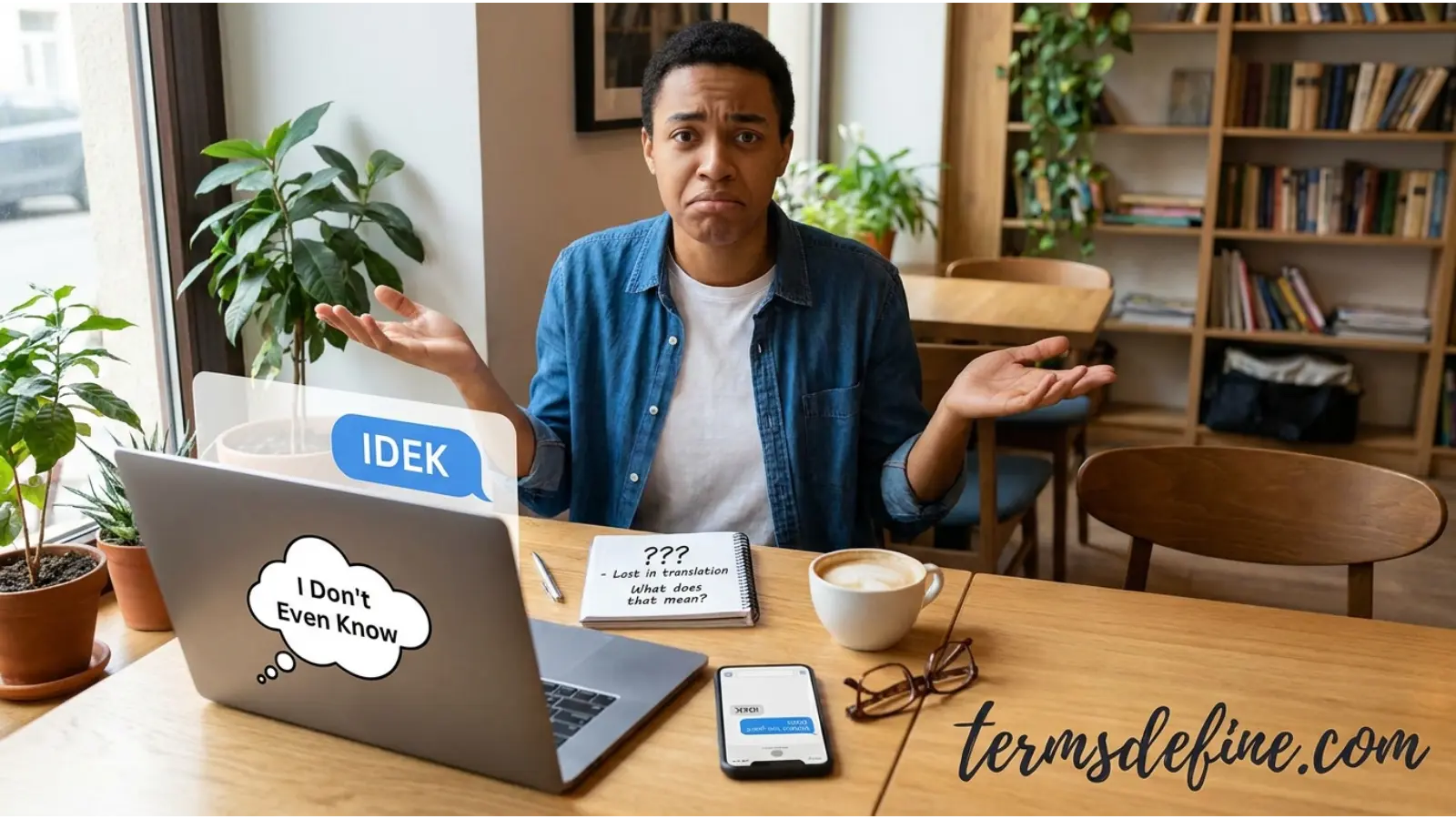
IDK means “I don’t know,” a neutral, straightforward reply. IDEK means “I don’t even know,” which adds emphasis and often emotion.
Think of IDK as a calm shrug and IDEK as a slightly exasperated shrug. If someone asks what time a party starts and you have no idea, IDK works fine.
If someone asks why your life feels chaotic lately, IDEK captures that deeper, more tangled uncertainty better than IDK ever could.
Where IDEK Is Commonly Used
IDEK shows up across nearly every casual digital space. It’s common in text messages between friends, Instagram and TikTok comments, Snapchat chats, Discord servers, and Twitter/X replies.
It’s rare in professional emails or formal documents because it reads as too casual. You’ll mostly see it among teens, young adults, and anyone chatting informally online.
The tone matches quick, low-effort replies rather than thoughtful, detailed responses.
IDEK on Texting and iMessage
In everyday texting, IDEK often answers questions about plans, feelings, or opinions. A friend might ask “why did you leave early?” and get back “idek, just wasn’t feeling it.”
It works well here because texting favors short replies. The lowercase, punctuation-free style is standard, since texting culture leans casual and quick rather than formal or polished.

IDEK on TikTok and Instagram
On TikTok and Instagram, IDEK frequently appears in comment sections reacting to confusing or chaotic videos. Someone might comment “idek what’s happening here but I can’t stop watching.”
It’s also used in captions to express uncertainty about a mood, outfit, or random thought.
Because these platforms thrive on quick, relatable reactions, IDEK fits naturally into the fast, informal rhythm of comment culture.
IDEK on Snapchat and Discord
Snapchat conversations move fast, and IDEK fits that pace perfectly for quick, disposable replies.
On Discord, especially in gaming or community servers, IDEK often responds to questions about strategy, drama, or confusing situations.
A gamer might type “idek how I survived that round.” Both platforms favor shorthand since messages are meant to be read quickly and forgotten just as fast.
Realistic Conversation Examples
Text between friends:
“Are you okay? You seemed off today.”
“idek, just feeling weird lately.”
Group chat:
“Who’s driving to the concert?”
“idek yet, still figuring out rides.”
Instagram comment:
“why does this song hit so hard 😭”
“idek but I’ve replayed it ten times.”
Discord chat:
“how did you even beat that boss?”
“idek honestly, just got lucky I guess.”
These examples show IDEK working as a natural, low-pressure way to admit uncertainty without overexplaining.
Origin, Culture & History of IDEK
IDEK grew out of the same texting shorthand culture that gave us IDK, LOL, and BRB. As mobile texting became widespread in the 2000s and 2010s, people needed faster ways to type common phrases.
IDEK likely emerged as a natural extension of IDK, adding “even” for emphasis without much extra typing effort.
Where and When It Started
There’s no single confirmed origin point for IDEK. It appears to have developed gradually within texting and early social media communities rather than being coined by one specific person or event.
Its rise tracks closely with the growth of SMS texting and instant messaging platforms in the mid-2000s onward.
Cultural and Regional Roots
IDEK isn’t tied to one specific region or subculture. It spread broadly through general internet and texting culture, popular mainly among teens and young adults in English-speaking countries.
It fits naturally into casual digital communication rather than belonging to any single demographic group, music genre, or platform-specific trend.
Who Popularized It
No single influencer, meme, or viral moment is credited with popularizing IDEK. It grew organically as part of everyday texting slang, spreading through peer-to-peer conversations rather than through celebrity use or viral content.
If you see claims naming a specific origin, treat them with caution since the true history remains unconfirmed.
Emotional Tone Behind IDEK
The emotional tone of IDEK can shift depending on punctuation, capitalization, and surrounding words. Written plainly, it feels neutral or mildly tired.
Paired with an emoji like 😭 or 💀, it can feel dramatic or funny. Typed in all caps, “IDEK,” it often signals genuine shock or overwhelm. Reading the full message, not just the abbreviation, helps you catch the real emotional weight behind it.
Synonyms for IDEK
Several phrases carry similar meaning to IDEK, though each has slightly different flavor. “I have no idea” sounds more formal and direct. “No clue” feels casual and blunt. “Beats me” adds a playful, shrugging tone.
“I’m lost” suggests confusion about a specific situation rather than a simple answer. IDK remains the closest match, just without the emphasis that “even” brings to IDEK.
Antonyms and Opposite Phrases
The opposite of IDEK would be phrases showing confidence or certainty, like “I know exactly,” “for sure,” or “100% sure.”
These phrases communicate clarity and conviction, the direct opposite of the uncertain, unsure tone that IDEK carries.
Seeing both types of phrases side by side helps highlight just how much IDEK leans into doubt and confusion rather than confidence.
Common Misunderstandings About IDEK
Some people mistake IDEK for a typo of IDK, but it’s actually a distinct phrase with its own meaning. Others assume it always signals sadness or distress, when often it’s just casual confusion or mild surprise.
It’s also sometimes confused with IDGAF or other longer acronyms due to similar letter patterns, though the meanings are completely unrelated.
When Not to Use IDEK
Avoid IDEK in professional emails, job applications, academic writing, or formal conversations. It reads as too casual and can come across as unprepared or dismissive in serious settings.
Instead, use phrases like “I’m not certain” or “I don’t have that information right now” in professional contexts. Save IDEK for texts, casual chats, and informal social media interactions where a relaxed tone fits naturally.
Professional Alternatives to IDEK
If you need a more polished way to express uncertainty at work or school, try phrases like “I’ll need to look into that,” “I’m not sure yet, but I’ll find out,” or “That’s a good question, let me check.”
These alternatives communicate the same core uncertainty as IDEK while maintaining a respectful, professional tone appropriate for emails, meetings, or formal written communication.
How IDEK Fits Into Modern Texting Culture
IDEK reflects a broader trend in digital communication: compressing full feelings into short, expressive abbreviations.
As texting and social media prioritize speed and relatability, phrases like IDEK let people express genuine uncertainty without sounding overly formal or robotic.
It’s part of a much larger shorthand vocabulary that keeps online conversations feeling natural, quick, and emotionally honest.
Internal Linking Opportunities
- Recommended Anchor Text: “what does IDK mean in texting” -> Proposed Link Topic: IDK Meaning Explained
- Recommended Anchor Text: “common texting abbreviations list” -> Proposed Link Topic: Texting Slang Dictionary
- Recommended Anchor Text: “IDGAF meaning explained” -> Proposed Link Topic: IDGAF Meaning in Text
- Recommended Anchor Text: “Gen Z slang terms to know” -> Proposed Link Topic: Gen Z Slang Guide
- Recommended Anchor Text: “TikTok comment slang explained” -> Proposed Link Topic: TikTok Slang Dictionary
Key Takeaways
- IDEK means “I Don’t Even Know,” used to express genuine uncertainty or confusion.
- It carries more emotional weight than IDK, often signaling frustration or surprise.
- Common across texting, TikTok, Instagram, Snapchat, and Discord, but not formal settings.
- No confirmed single origin; it developed gradually alongside general texting slang.
- Tone shifts based on punctuation, capitalization, and emojis used alongside it.
- Avoid it in professional or academic writing; use clearer alternatives instead.
FAQ Section
What does IDEK Meaning in Text and message?
IDEK Meaning in Text “I Don’t Even Know.” It’s used when someone is genuinely unsure or confused about something being discussed.
Is IDEK the same as IDK?
Not exactly. IDK means “I don’t know” in a neutral way, while IDEK adds emphasis, often showing more confusion or mild frustration.
Can IDEK be used in professional emails?
No, IDEK is too casual for professional or formal writing. Use phrases like “I’m not certain” instead.
Where did IDEK come from?
Its exact origin is unconfirmed. It likely developed as a natural extension of IDK within general texting and social media culture.
Does IDEK always mean something negative?
No, it can be neutral, funny, or dramatic depending on context, punctuation, and emojis used in the message.
Is IDEK used more by teens or adults?
It’s most common among teens and young adults, though anyone using casual texting or social media may use it occasionally.
Conclusion
IDEK is a small phrase with a lot of personality packed into five letters. It captures genuine uncertainty in a way that feels quick, relatable, and honest, If you’re texting a friend or commenting on a confusing video online.
Understanding when and where to use it, and when to switch to something more formal, helps you communicate clearly across every digital space you use.

My name is Tayyab Abbas, and I am the lead content author at TermsDefine.com. Holding a Master’s degree in English along with 5+ years of dedicated linguistic research experience, I focus on transforming complex terminology, word definitions, and technical jargon into clear, easy-to-understand explanations. Every entry, context guide, and meaning published on this platform is thoroughly researched, drafted, and verified by me to maintain the highest standards of accuracy and real-world clarity. My objective is to provide readers with an authoritative, dependable dictionary resource for all their vocabulary needs.
1 thought on “IDEK Meaning in Text: What It Really Means and How to Use It”