

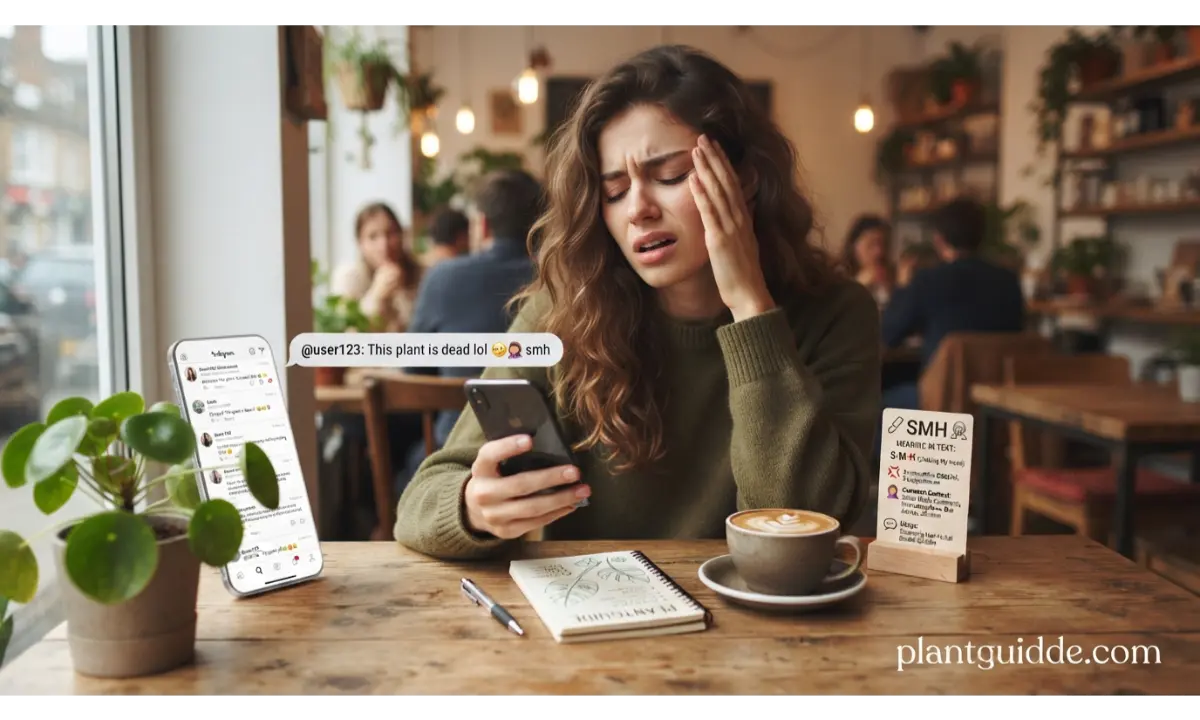
SMH Meaning in Text “SMH” in a text, comment, or social media post, you may wonder what those three letters actually mean. SMH meaning in text is usually “shaking my head”, an informal expression used to show disappointment, disbelief, frustration, or mild annoyance. Instead of literally shaking their head, a person uses SMH to communicate a reaction to something they find unreasonable, surprising, or frustrating. The abbreviation is common in digital conversations because it quickly adds emotional context without requiring a long explanation. You may see it in messages between friends, social media comments, group chats, memes, and casual online discussions. However, SMH does not always sound angry. Depending on the conversation, it can be serious, playful, sarcastic, or mildly amused. Understanding the surrounding context helps you interpret the intended tone correctly.
Quick Answer
SMH Meaning in Text “shaking my head” in texting and online communication. It expresses reactions such as disbelief, disappointment, frustration, annoyance, or sometimes amused disbelief.
What Does SMH Stand For?
SMH Meaning in Text “shaking my head” or, in some explanations, “shake my head.” The phrase represents the physical reaction people often make when something seems foolish, disappointing, unbelievable, or frustrating.

For example:
Friend: “I forgot my keys again.”
You: “SMH 😂”
Here, SMH communicates a reaction without needing to write “I can’t believe you forgot them again.”
The abbreviation is an initialism, meaning the letters come from the first letters of the words. It became part of online communication because short expressions are convenient in fast-moving conversations.
SMH Meaning in Texting
SMH Meaning in Text , SMH is mainly used as a quick reaction. Someone might send it after hearing something frustrating, silly, surprising, or disappointing.
For example:
A: “He canceled five minutes before we left.”
B: “SMH, seriously?”
The expression does not necessarily mean the sender is furious. It often communicates a combination of disbelief and annoyance.
You can also place it at the beginning or end of a message:
- “SMH, I can’t believe that happened.”
- “You really did that smh.”
- “They forgot the deadline again. SMH.”
The surrounding words usually make the intended emotion clearer.
SMH Meaning on Social Media
SMH Meaning in Text SMH works much like it does in private texts. People often use it in comments, captions, replies, and posts when reacting to something they consider disappointing, ridiculous, or difficult to believe.
For example:
“People are still arguing about this? SMH.”
It can also appear after a funny mistake:
“I walked into the wrong classroom again smh.”
Dictionary.com describes SMH as an internet abbreviation associated with reactions including disbelief, disgust, frustration, and impatience.
Because social media posts often rely on short reactions, SMH can communicate an entire attitude in only three letters.
What Does SMH Mean on TikTok?
On TikTok, SMH generally has the same meaning: “shaking my head.” It is commonly used to express frustration, exasperation, or disbelief about something shown in a video or discussed in a comment.
For example:
Comment: “He really thought that would work. SMH.”
The tone may be critical, humorous, or playful depending on the video.
TikTok users may also combine SMH with emojis, such as 😂, 😭, or 🤦, to make the intended reaction easier to understand. The abbreviation itself does not automatically tell you whether someone is joking.
What Does SMH Mean From a Girl?
If a girl sends you SMH, the basic meaning does not change. It normally indicates that she is reacting to something you said or did with disbelief, disappointment, frustration, or playful annoyance.
For example:
You: “I accidentally ordered the wrong pizza.”
Her: “SMH 😂”
The laughing emoji suggests that she may be teasing rather than seriously criticizing you.
If she says:
“SMH, you never listen.”
the tone may be more genuinely frustrated.
There is no universal “girl-specific” meaning. The relationship, conversation history, punctuation, and other messages matter more than gender.
What Does SMH Mean From a Guy?
When a guy uses SMH, it generally carries the same meaning as it does when anyone else uses it. He may be expressing disbelief, disappointment, annoyance, or playful criticism.
For example:
You: “I forgot to submit the assignment.”
Him: “SMH bro.”
That could communicate friendly teasing rather than serious anger.
Likewise, “SMH, that’s ridiculous” sounds more openly critical. The important point is that SMH itself does not reveal a person’s exact emotional state. Context provides the missing information.
SMH in Friendship Conversations
Among friends, SMH is often casual and playful. Friends may use it when someone makes an obvious mistake, tells an unbelievable story, or does something mildly embarrassing.
Example:
A: “I spent 20 minutes looking for my phone.”
B: “Where was it?”
A: “In my hand.”
B: “SMH 😂”
Here, the abbreviation expresses humorous disbelief.
Because friends usually understand each other’s communication style, SMH can be used without sounding harsh. Still, the same letters could sound more critical when used during an argument.
SMH in Romantic Conversations
In dating or romantic conversations, SMH can be playful, teasing, or genuinely annoyed.
For example:
You: “I ate the last cookie.”
Partner: “SMH, you know that’s my favorite 😂”
That is probably lighthearted.
But:
“SMH. You said you’d call me.”
could communicate real disappointment.
SMH is therefore not automatically flirty, angry, or affectionate. Look at the complete conversation, including emojis and punctuation, before deciding what the sender means.
Common SMH Texting Examples
Here are some natural examples of how people might use SMH:
Example 1 — Disbelief
A: “He sold his laptop because he needed money, then bought a new phone.”
B: “SMH.”
Example 2 — Mild frustration
A: “The bus left two minutes early.”
B: “SMH, that’s so annoying.”
Example 3 — Friendly teasing
A: “I forgot my own birthday plans.”
B: “SMH 😂”
Example 4 — Social media reaction
Comment: “They changed the rules again. SMH.”
These examples show why context matters. The abbreviation can communicate different shades of reaction.
How to Use SMH Correctly
Use SMH when you want to express a reaction rather than simply state information. It works naturally in casual texts, comments, group chats, and social media conversations.
Common patterns include:
- SMH, I can’t believe it.
- I forgot again, smh.
- SMH 😂
- That was such a bad decision. SMH.
Lowercase smh and uppercase SMH generally have the same meaning. Capitalization can sometimes change the visual emphasis, but it does not create a completely different definition.
Keep in mind that SMH is informal. It works best when the people involved understand internet and texting language.
How to Respond to SMH
Your response depends on why the other person used SMH.
If they are joking, you can respond playfully:
Them: “SMH 😂”
You: “I know, I know. My bad 😂”
If they seem annoyed, acknowledge what happened:
Them: “SMH, you forgot again.”
You: “You’re right. I’ll fix it.”
If you are unsure whether they are joking or serious, ask:
“Are you actually annoyed or just teasing me?”
That can prevent a small misunderstanding from becoming a larger one. Remember that SMH communicates a reaction, but it does not provide every detail about the sender’s emotion.
Is SMH Rude or Disrespectful?
SMH can sound rude in some situations, but it is not inherently disrespectful. Much depends on the relationship and context.
Sending “SMH” by itself during an argument can feel dismissive because it may suggest that you think the other person’s behavior is unreasonable.
Among close friends, however, the same abbreviation can be harmless teasing.
Compare:
- “SMH 😂 you’re impossible.” — potentially playful.
- “SMH. Whatever.” — more dismissive.
- “SMH, that’s disappointing.” — clearly critical.
Punctuation, emojis, and surrounding language can strongly affect the tone.
SMH vs. Similar Slang
Several abbreviations can communicate reactions similar to SMH, but they are not identical.
SMH — shaking my head; disbelief, frustration, or disappointment.
SMDH — commonly “shaking my damn head,” adding stronger emphasis.
LOL — laughing out loud; usually signals amusement.
OMG — oh my God; often expresses surprise or shock.
WTF — a much stronger reaction that can express confusion, anger, or disbelief.
Dictionary.com notes that SMDH can intensify the reaction expressed by SMH.
Choosing between them depends on how strong and informal you want your reaction to sound.
Does SMH Have Other Meanings?
The most relevant internet meaning of SMH is “shaking my head.” However, abbreviations can have other meanings in different contexts.
Dictionary.com notes less common uses such as “so much hate” and “scratching my head.” SMH can also refer to organizations or names outside internet slang, including the initials associated with The Sydney Morning Herald.
If you see SMH in a text or social media comment, “shaking my head” is usually the interpretation to consider first. In professional, medical, business, or news contexts, however, the surrounding information may point to a different meaning.
When Should You Not Use SMH?
Avoid SMH when you need formal, precise communication. It is generally unsuitable for:
- Job applications
- Formal business emails
- Academic assignments
- Official reports
- Legal documents
- Professional customer communication
Instead of writing “SMH”, use a clear phrase such as “I am disappointed,” “I am surprised,” or “I don’t understand why this happened.”
Slang is not wrong simply because it is informal. The key issue is whether the communication setting calls for casual language or standard professional English.
Where Did SMH Come From?
The exact origin of SMH is not firmly established. Dictionary.com says the initialism emerged in online communication by the 2000s and connects naturally to the physical gesture of shaking one’s head to express disagreement or frustration. Its earliest Urban Dictionary entry dates to 2004, while its use on Twitter was documented by 2007.
Rather than attributing SMH to one confirmed inventor, it is more accurate to describe it as part of the development of internet and texting language.
As digital communication expanded, abbreviations like SMH provided quick ways to communicate emotions that would otherwise be conveyed through facial expressions or body language.
Why Does SMH Work So Well in Texting?
Text messages remove many physical signals that people normally use during face-to-face conversations. You cannot see whether someone is rolling their eyes, laughing, sighing, or shaking their head.
SMH helps replace one of those visual reactions with a short written signal.
For example, saying:
“SMH, you really forgot?”
can suggest the sender is reacting as though they are physically shaking their head.
That does not mean the sender is literally performing the gesture. Instead, the phrase creates a recognizable mental image and adds emotional context to otherwise plain text.
Common Misunderstandings About SMH
One common mistake is assuming SMH always means anger. It can indicate disappointment, disbelief, frustration, amusement, or playful teasing.
Another mistake is assuming it has a special meaning when sent by a particular gender. It does not.
People may also misunderstand a one-word reply such as “SMH” because it lacks enough context to reveal the sender’s exact emotion.
For example:
“SMH 😂” may be playful, while “SMH.” during an argument may feel much more serious.
When uncertain, read the surrounding messages instead of interpreting the abbreviation in isolation.
Internal Linking Opportunities
For Termsdefine.com, these related topics could make useful internal links:
- Anchor: “texting abbreviations” — link to a guide covering common text shortcuts.
- Anchor: “common internet slang” — connect readers with a broader slang glossary.
- Anchor: “social media slang” — explain abbreviations commonly seen on social platforms.
- Anchor: “how to respond to slang” — provide practical advice for unfamiliar online expressions.
- Anchor: “Gen Z slang” — introduce readers to newer digital communication terms.
These should point only to relevant Termsdefine.com pages once the corresponding URLs are verified.
Key Takeaways
- SMH usually means “shaking my head.”
- It commonly expresses disbelief, frustration, disappointment, or annoyance.
- The tone can be serious, playful, sarcastic, or humorous depending on context.
- SMH is common in texts, comments, group chats, and social media.
- It is informal and should generally be avoided in formal writing.
- Context matters because SMH alone does not reveal the sender’s exact emotion.
FAQs
What does SMH mean in text?
SMH usually means “shaking my head.” It is used to express disbelief, frustration, disappointment, annoyance, or sometimes playful amusement.
What does SMH mean on social media?
On social media, SMH generally has the same meaning. People use it when reacting to posts, videos, comments, or situations they find frustrating, surprising, or ridiculous.
What does SMH mean from a girl?
It does not have a special meaning when a girl uses it. She may be expressing disbelief, annoyance, disappointment, or playful teasing depending on the conversation.
What does SMH mean from a guy?
A guy using SMH normally means “shaking my head.” His exact tone depends on the surrounding message and relationship.
Is SMH rude?
It can sound rude or dismissive in some situations, particularly during an argument. Between friends, however, it may simply be playful teasing.
How do you respond to SMH?
Respond according to the context. If the person is joking, you can joke back. If they are genuinely disappointed, acknowledge the issue and respond directly.
Is SMH formal or informal?
SMH is informal internet and texting language. It is appropriate for casual digital conversations but generally unsuitable for academic or professional writing.
Conclusion
SMH meaning in text is most commonly “shaking my head,” a short expression used to show disbelief, frustration, disappointment, annoyance, or playful disbelief. You can find it in texts, comments, group chats, and social media conversations. The abbreviation itself does not determine whether someone is angry or joking, so always consider the surrounding words, emojis, punctuation, and relationship between the people communicating. When used casually, SMH can make a reaction feel quick and expressive. In formal communication, however, spelling out the intended feeling is clearer and more appropriate.

My name is Tayyab Abbas, and I am the lead content author at TermsDefine.com. Holding a Master’s degree in English along with 5+ years of dedicated linguistic research experience, I focus on transforming complex terminology, word definitions, and technical jargon into clear, easy-to-understand explanations. Every entry, context guide, and meaning published on this platform is thoroughly researched, drafted, and verified by me to maintain the highest standards of accuracy and real-world clarity. My objective is to provide readers with an authoritative, dependable dictionary resource for all their vocabulary needs.