

GTFO Meaning in Text “GTFO” and wondered what the sender meant? GTFO is an internet slang abbreviation that can sound aggressive, funny, or surprised depending on the conversation. Understanding its meaning and tone can help you avoid misunderstandings.
Quick Answer:
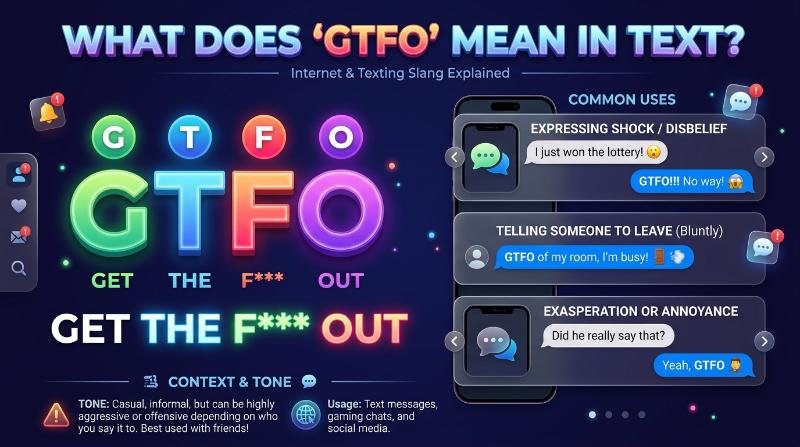
GTFO stands for “Get the fuck out.” In texting, it can tell someone to leave or go away. It can also express disbelief or surprise, similar to saying “No way!” Because it contains profanity, it can sound rude or offensive.
What Does GTFO Stand For?
GTFO is an abbreviation formed from the words “Get The Fuck Out.”
Each letter represents one word:
- G — Get
- T — The
- F — Fuck
- O — Out
The phrase is blunt and informal. When someone uses it as a command, they may be telling another person to leave a place, stop participating in a conversation, or go away.
However, the expression does not always communicate anger. Friends may use it as an exaggerated reaction to surprising news or an unbelievable story.
For example:
Friend A: I just won two concert tickets!
Friend B: GTFO! Seriously?
In this conversation, GTFO expresses surprise rather than a literal demand to leave.
How Is GTFO Used in Texting?
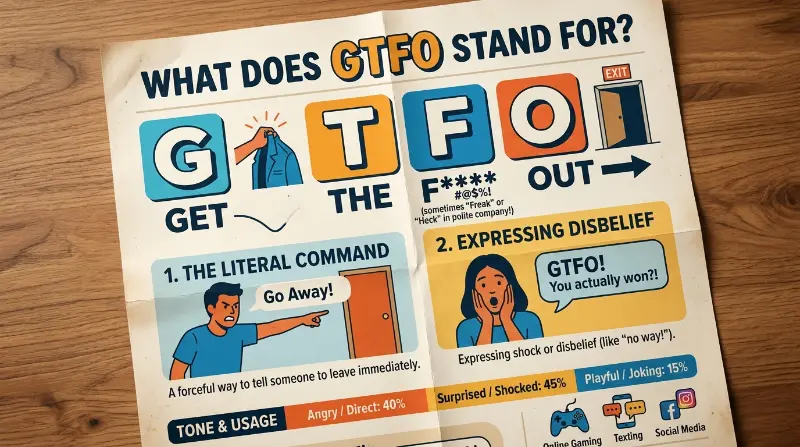
GTFO Meaning in Text depends on the words around it and the relationship between the people communicating. Here are three common ways to understand it.
Telling Someone to Leave
GTFO can be a forceful way to tell someone to leave or stop bothering you.
Example:
A Person : I’m coming over even though you said no.
B Person: GTFO. I already told you I’m not available.
Here, the sender is expressing frustration and setting a boundary. The abbreviation makes the message sound harsh and confrontational.
Expressing Surprise or Disbelief
People may also use GTFO when they hear something difficult to believe. In this situation, it can mean “No way,” “You’re kidding,” or “Are you serious?”
Example:
Friend A: She met her favorite singer yesterday!
Friend B: GTFO! How did that happen?
The reply expresses surprise. It does not necessarily mean the sender wants anyone to leave.
Joking With Friends
Among friends who are comfortable with strong language, GTFO can be used as playful teasing.
Example:
Friend A: I finished the whole project in one hour.
Friend B: GTFO 😂 You were complaining about it all day!
The sender is likely joking about the surprising claim. However, this interpretation depends on the friendship and the surrounding conversation. The same message could sound insulting to someone who does not know the sender well.
What Does GTFO Mean on Social Media?
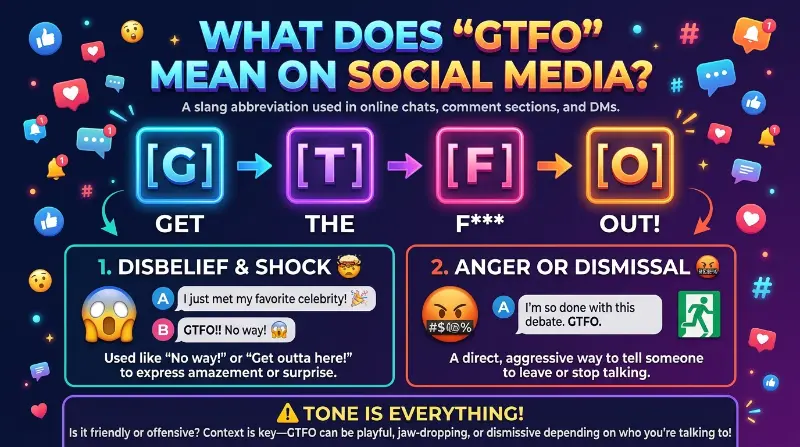
On platforms such as TikTok, Instagram, Snapchat, Reddit, and in gaming chats, GTFO generally carries the same basic meanings as it does in text messages.
Its exact tone depends on how it appears in a post or comment.
| Context | Possible meaning |
|---|---|
| An argument | Go away or leave me alone |
| A surprising story | No way! |
| A funny post | An exaggerated reaction |
| An online dispute | A rude dismissal |
| A gaming chat | A command to leave or stop interfering |
These are contextual examples, not separate official definitions for each platform. Do not assume that every person using GTFO intends to offend someone.
Is GTFO Rude or Offensive?
Yes, GTFO is generally considered vulgar and potentially offensive. Its full form contains a strong swear word, so it may be inappropriate in many social and professional situations.
However, the level of hostility can vary.
- Playful: A close friend reacts to surprising news with “GTFO 😂.”
- Annoyed: Someone uses it after repeated unwanted messages.
- Aggressive: A person writes “GTFO of my house” during an argument.
- Dismissive: Someone uses it to reject another person’s opinion.
Capital letters, punctuation, emojis, and previous messages can offer clues about the tone, but none guarantees the sender’s intention.
If you are unsure, consider the entire conversation before deciding whether the message is playful or hostile.
How Should You Reply to GTFO?
Your response should depend on what the sender appears to mean and how comfortable you are with their language.
1 If they are joking or surprised:
- “Haha, yes! It’s true.”
- “I know, crazy, right?”
- “Believe it or not, it happened!”
2 If they seem angry:
- “What’s wrong? Can we talk about it?”
- “I’ll give you some space.”
- “Please tell me what the issue is without insulting me.”
3 If they are asking you to leave or stop contacting them:
- “Okay, I’ll respect your request.”
- “Understood. I won’t continue this conversation.”
You do not need to respond with profanity just because someone used it toward you. A calm reply can prevent an argument from becoming more serious.
Polite Alternatives to GTFO
1 If you want to communicate the same general idea without swearing, choose wording that fits your situation.
| Instead of GTFO | Try this |
|---|---|
| Telling someone to leave | “Please leave.” |
| Asking someone to stop | “Please stop.” |
| Ending a conversation | “I’d rather not continue this discussion.” |
| Expressing surprise | “No way!” |
| Showing disbelief | “Are you serious?” |
| Asking for space | “I need some time alone.” |
These alternatives are more suitable for work, school, professional messages, and conversations with people you do not know well.
Common Misunderstandings About GTFO
A few mistakes can lead to unnecessary confusion.
Assuming it always means anger: GTFO can express surprise or playful disbelief, especially between close friends.
Assuming it is harmless when used as a joke: Even if the sender intends humor, the recipient may find the profanity insulting.
Treating it as formal language: GTFO is informal slang and is not appropriate for most official or professional writing.
Ignoring the surrounding conversation: A laughing emoji and exciting news may suggest a playful reaction, while an argument and a direct command may indicate genuine hostility.
The safest interpretation comes from the complete message and the relationship between the people involved.
Key Takeaways
- GTFO Meaning in Text “Get the fuck out.”
- It can tell someone to leave or express surprise and disbelief.
- The abbreviation is vulgar, although friends sometimes use it jokingly.
- Context, relationship, and surrounding messages help clarify the intended tone.
- Polite alternatives such as “Please leave” or “No way!” are better when strong language is inappropriate.
Frequently Asked Questions
What does GTFO mean in a text message?
GTFO Meaning in Text “Get the fuck out.” It can be a forceful command to leave or an informal expression of surprise, depending on the conversation.
Does GTFO always mean someone is angry?
No. Someone may use GTFO jokingly or to express disbelief. During an argument, however, it can be an aggressive or insulting dismissal.
What does GTFO mean from a friend?
A friend might use it playfully when you share surprising news or make an unbelievable claim. If the conversation is tense, it may instead express frustration. Consider your usual communication style with that person.
Is GTFO appropriate for work?
Generally, no. Because it contains profanity and can sound confrontational, it is better to use clear, professional alternatives such as “Please leave,” “Let’s end this discussion,” or “Are you serious?”
How do you respond when someone texts GTFO?
If the person is joking, you can respond naturally. If they seem upset, ask what is wrong or give them space. If they want you to stop contacting them, respect that request.
Conclusion
GTFO Meaning in Text “Get the fuck out” and is used in text messages and online conversations as either a forceful dismissal or an expression of surprise. Although friends may use it jokingly, it remains vulgar and can easily offend someone. Look at the context before interpreting the message, and choose a polite alternative when the situation calls for it.

My name is Tayyab Abbas, and I am the lead content author at TermsDefine.com. Holding a Master’s degree in English along with 5+ years of dedicated linguistic research experience, I focus on transforming complex terminology, word definitions, and technical jargon into clear, easy-to-understand explanations. Every entry, context guide, and meaning published on this platform is thoroughly researched, drafted, and verified by me to maintain the highest standards of accuracy and real-world clarity. My objective is to provide readers with an authoritative, dependable dictionary resource for all their vocabulary needs.